

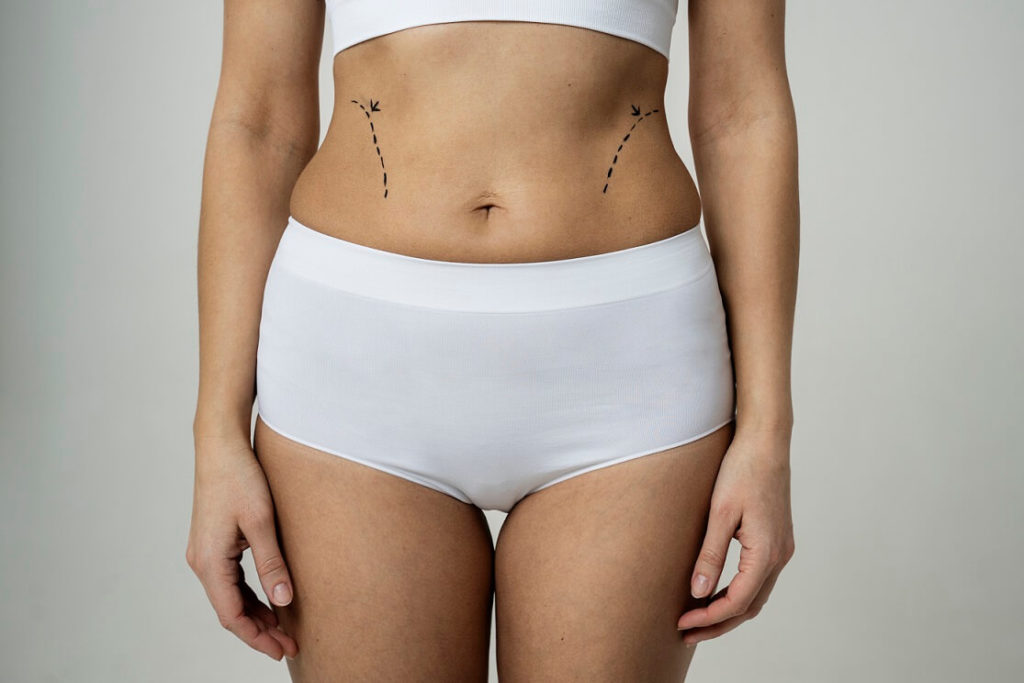
Dr. Mark X. Lowney fields various questions from his New England liposuction patients. One frequently asked question is how body fat behaves after liposuction, namely, does it redistribute to other areas of the body? In this blog post, Dr. Lowney breaks down liposuction misconceptions and clarifies how the body stores fat after liposuction. Then, our cosmetic surgeon explains how patients can maximize their liposuction results.
Understanding Liposuction
Liposuction, also known as lipoplasty or just “lipo,” is a popular fat reduction treatment. According to the American Society of Plastic Surgeons, liposuction consistently ranks among the top five most requested cosmetic surgical procedures. It is safe effective, and capable of producing natural-looking, long-lasting results when performed by an experienced surgeon.
Men and women seek liposuction to contour areas of the body and remove excess fat that resists diet and exercise. Lipo works best for individuals who are generally close to their healthy weight range and is not intended for extreme weight loss. It’s best viewed as a “finishing touch” to improve the appearance of certain areas of the body by removing stubborn fat pockets that diet and exercise alone cannot address.
Types of Liposuction
There are two types of liposuction: laser-assisted and power-assisted. Laser-assisted liposuction uses targeted laser energy to liquefy fat cells before they are removed, which can also stimulate some skin tightening in the treated area. Power-assisted liposuction uses a vibrating cannula to break up fat more efficiently, allowing for more precise removal with less physical effort on the surgeon’s part. Both approaches follow the same fundamental process: fat is removed using hollow metal tubes called cannulas inserted through small incisions and attached to a suctioning device. The cannulas are moved back and forth to loosen and remove fat cells until the desired contour is achieved.
Benefits of Liposuction
Liposuction offers a range of advantages that make it one of the most sought-after body-contouring procedures. Here is a look at what patients can expect:
- Reduces excess fat deposits in targeted areas
- Permanently destroys fat cells
- Sculpts and contours the body
- Safe, FDA cleared procedure
- Natural-looking fat reduction
- Long-lasting results
- Scientifically proven as safe and effective
Lipo Treatment Areas
Liposuction can target any deposit of excess fat on the body. Popular treatment areas include:
- Upper and lower abdomen (belly fat)
- Flanks (hips, love handles)
- Buttocks
- Upper arms
- Mons pubis (the pubic region)
- Back and armpit area (bra bulge)
- Inner and outer thighs
- Neck and chin area (double chin)
- Inner knee and calves
Am I a Good Candidate for Liposuction?
Liposuction works best for patients who are already close to their healthy weight range but have specific areas of stubborn fat that do not respond to diet and exercise. It is not a weight loss procedure, and patients who are significantly above their goal weight are generally better served by focusing on lifestyle changes before considering surgery.
Good candidates for liposuction typically have the following characteristics:
- A stable body weight within or close to a healthy range
- Localized pockets of fat in one or more specific areas
- Good skin elasticity, as skin needs to contract and conform to the new contour after fat is removed
- Good overall health with no conditions that would increase surgical risk
- Non-smokers, or patients willing to quit smoking before and after surgery
Skin elasticity is worth paying particular attention to. Patients with significant skin laxity in the treatment area may find that removing fat without addressing the skin leaves them with loose or uneven results. In these cases, your surgeon may recommend combining liposuction with a skin-tightening procedure for the best outcome.
Subcutaneous Fat vs. Visceral Fat
Subcutaneous fat and visceral fat are two distinct types of fat found in our bodies, and understanding the difference is important for setting realistic expectations about what liposuction can and cannot achieve.
Subcutaneous Fat
Subcutaneous fat lies just beneath our skin and acts as a protective cushion and helps insulate our bodies. It is the fat that you can see and feel, including “love handles” and the soft layer beneath the skin on the abdomen, thighs, and arms. While some subcutaneous fat is normal and healthy, excessive amounts can lead to a heavier appearance in specific areas. This is the type of fat that liposuction targets and removes.
Visceral Fat
Visceral fat is located deeper inside the body, surrounding organs like the liver, pancreas, and intestines. It cannot be seen or felt from the outside and is not accessible through liposuction. Visceral fat is more harmful than subcutaneous fat and is linked to serious health conditions including heart disease, type 2 diabetes, and high blood pressure. An abdomen that protrudes due to visceral fat or fat beneath the muscle will not be improved by liposuction. The only effective ways to reduce visceral fat are regular exercise and a well-balanced diet.
Why This Distinction Matters for Patients
Patients who carry a significant amount of visceral fat may find that liposuction improves the contour of specific areas but does not produce the overall slimming effect they were hoping for. Understanding this before your procedure helps set accurate expectations and allows you and your surgeon to have an honest conversation about what results are realistic for your body composition.
How Fat Behaves After Liposuction
Now that you have a better understanding of the different types of fat, it is important to understand how fat behaves in the body after liposuction. After adolescence, the number of fat cells in the body does not change. Fat cells increase and decrease in size based on changes in body weight, but the total number remains fixed. Liposuction permanently removes fat cells from a targeted area, and those cells do not grow back. The body cannot regenerate fat cells.
What Happens If You Gain Weight After Lipo
This is where the redistribution question becomes important. If a patient gains weight after liposuction, the remaining fat cells throughout the body will enlarge to store the additional energy. In areas that were treated with liposuction, there are fewer fat cells remaining, so less fat accumulates there. In untreated areas, where the full complement of fat cells remains, more noticeable enlargement may occur.
This may give the impression that the fat has “shifted” or redistributed to other areas of the body. However, what is actually happening is that existing fat cells in untreated areas are growing larger in response to weight gain, not that new fat cells have appeared or that fat has physically moved. If the body weight remains stable after liposuction, fat cells in both treated and untreated areas remain unchanged in size.
Fat Distribution and Liposuction in Scientific Literature
A common myth about liposuction is that after your procedure, you will have more fat cells in the untreated areas of your body than in the treated areas. However, a study from the Journal of Plastic and Reconstructive Surgery supports evidence that fat cells neither return to treated areas or get redistributed to untreated areas of the body after lipo.
The study assessed over 300 patients who underwent liposuction and evaluated photographs and precise body measurements preoperatively and three months post-op. The study revealed no fat regrowth in treated areas such as the arms, abdomen, or lower body.
Additionally, upper body dimensions were unchanged after surgery, indicating no fat redistribution. Average reductions in hip measurements remained significant in patients followed one year or more after their liposuction procedure. The average hip reduction was significant even among a subgroup of 34 patients who gained five pounds or more after surgery. In conclusion, liposuction patients can be reassured that their results are long-lasting and should not worry about putting weight back on disproportionately.
What to Expect During Liposuction Recovery
Recovery from liposuction is generally well-tolerated, though it does require some patience as swelling subsides and final results emerge. Understanding what the recovery process involves helps patients prepare appropriately and follow the steps that support the best possible outcome.
Immediately After Surgery
After your procedure, the treated area will be wrapped in a compression garment, which helps reduce swelling, supports the tissue as it heals, and helps the skin conform to its new contour. Some fluid drainage from the small incision sites is normal in the first day or two. Most patients experience soreness and swelling in the treated areas, though the level of discomfort is typically manageable with prescribed medication. Dr. Lowney sends most patients home on a narcotic-free medication regimen. You will need a trusted person to drive you home and stay with you for the first 24 hours.
Returning to Normal Activities
Most patients are able to return to a desk job or light daily activities within one to two weeks, depending on the extent of their procedure. More physical work or strenuous exercise typically requires a longer break, and Dr. Lowney will provide specific guidance based on your individual procedure. Most patients can resume normal routines, including sexual activity, within two to three weeks. One drain is typically placed across the lower back to prevent fluid accumulation, and this is usually removed within five to seven days.
Swelling and Final Results
Swelling is a normal and expected part of liposuction recovery and can take several months to fully resolve. Most patients notice significant improvement within the first few weeks, but final results typically become fully apparent around three to six months post-procedure. Wearing your compression garment as directed, staying hydrated, eating a high-protein diet, and avoiding strenuous activity during the early recovery period all contribute to a smoother healing process and better long-term results.
How To Maintain Your Liposuction Results Long-Term
Liposuction is a significant investment in your appearance, and protecting that investment requires an ongoing commitment to a healthy lifestyle. A common misconception after lipo is that you can eat whatever you want without consequence. This is not accurate.
Diet and Nutrition
After liposuction, maintaining your post-procedure weight is essential for preserving your results. While you will have fewer fat cells in treated areas, the remaining fat cells throughout the body can still enlarge with weight gain. Eating a nutritious, balanced diet with appropriate portion control is the most important long-term habit you can develop. Focus on whole foods, lean proteins, fiber-rich vegetables, and limited processed foods and added sugars.
Exercise and Staying Active
Regular physical activity supports weight stability, improves circulation, and helps maintain the contoured results liposuction provides. Many patients find that their newly sculpted physique motivates them to exercise more consistently, and for some, removing large pockets of fat actually makes exercise more comfortable and accessible. Aim for a combination of cardiovascular activity and strength training to support both fat management and overall health.
Monitoring Your Weight
Small fluctuations in weight are normal, but significant weight gain after liposuction will affect your results. A useful guideline is to maintain your weight at or below your post-procedure weight. If you weighed 150 pounds before surgery and had five pounds of fat removed, keeping your weight at or below 145 pounds helps preserve the outcome. Gaining a few extra pounds will cause some enlargement of the remaining fat cells, which can soften your results, though the overall improved contour will typically remain visible, since treated areas have fewer fat cells and a lower rate of fat cell enlargement than surrounding areas.